


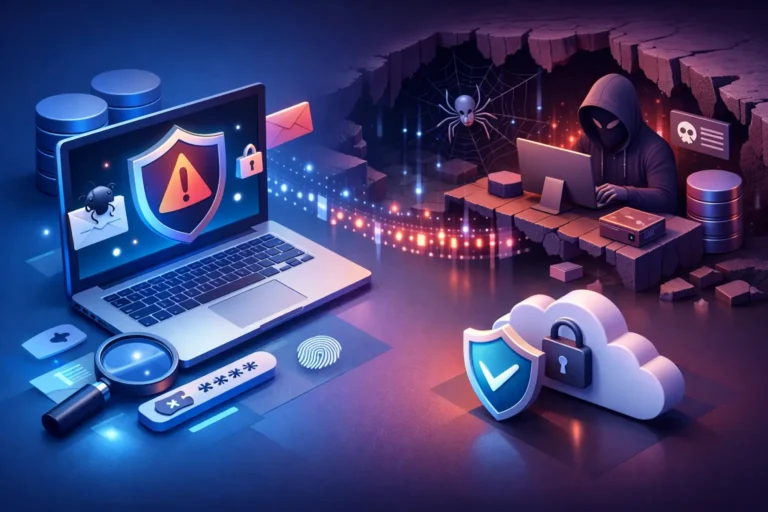
A staff member reuses a password from an old website. Months later, that login appears in a criminal marketplace alongside thousands of other stolen credentials. Nothing may look wrong in the office yet, but the same email and password could be tested against Microsoft 365, accounting software, remote access tools, or a cloud file-sharing account.
That is how dark web alerts protect businesses: they provide an early warning that business-related information may be exposed before criminals turn it into a costly account takeover, fraud attempt, or ransomware incident. For small and mid-sized organizations, the value is not in chasing internet rumors. It is in gaining time to act decisively.
What a Dark Web Alert Actually Means
The dark web is a part of the internet that is not indexed by standard search engines and is often associated with anonymous browsing and illegal activity. Stolen usernames, passwords, customer data, payment details, and access credentials may be shared, traded, or sold there. However, not every exposed credential originates on the dark web. Information can also surface through data breaches, malware logs, phishing kits, and criminal forums.
A dark web monitoring service searches known sources for information connected to your organization, such as company email addresses, domains, passwords, or other identifiable data. When it finds a match, it generates an alert for review.
An alert is not proof that a criminal has entered your network. It is also not a replacement for antivirus protection, backups, email security, or employee training. Think of it as a smoke detector. It tells you there may be a problem worth investigating while there is still an opportunity to limit the damage.
For a legal office, the exposure might involve an employee’s email login. For a dental practice, it may be a password connected to a scheduling platform. For a construction company, it could be credentials for a cloud storage account containing bids, invoices, and project documents. The technical details differ, but the business risk is similar: one compromised identity can provide a path to sensitive systems.
How Dark Web Alerts Protect Businesses From Account Takeovers
Criminals commonly use exposed credentials in a technique called credential stuffing. They take usernames and passwords stolen from one service and automatically try them on many others. This works because people often reuse passwords, sometimes with only a small variation.
A monitoring alert can reveal that a company email address and password combination has been exposed. If that password is still in use anywhere, the organization can reset it immediately, end active sessions, and check for unusual activity. Even when the password is old, the alert is useful because it identifies an employee or account that may need closer review.
The most valuable protection comes from the response that follows. A prompt investigation can prevent an attacker from reaching email, impersonating an executive, changing banking details on an invoice, or accessing files that are later used for extortion.
Multi-factor authentication changes the equation as well. A stolen password alone is much less useful when the attacker must also satisfy a second sign-in requirement. That does not make multi-factor authentication invincible. Attackers may use phishing pages or social engineering to try to bypass it. Still, pairing it with fast password resets and careful alert review greatly reduces the chance that exposed credentials become a usable entry point.
Early Action Limits Expensive Disruption
The costs of a compromised account are rarely limited to IT repair. A criminal who gains access to email may send believable messages to clients, vendors, or staff. They may search for financial conversations, request payment changes, or use the trusted account to spread malicious links internally.
For an operationally dependent business, even a short interruption can cause missed appointments, delayed estimates, frustrated customers, and staff who cannot access the tools they need. Dark web alerts help shift security from reactive cleanup to early containment. The earlier a credential is identified and addressed, the fewer systems, people, and customers may be affected.
Not Every Alert Has the Same Urgency
An alert needs context. A password exposed ten years ago for a former employee account deserves a different response than credentials connected to an active administrator account. Treating every alert as a crisis can create alert fatigue, while ignoring alerts can leave genuine gaps unaddressed.
A practical review starts with a few questions: Is the account active? Does the user still work for the organization? Is the exposed password current or similar to one currently used? Does the account have access to financial, health, legal, customer, or administrative information? Has there been any unusual sign-in activity, password reset request, mailbox rule, or forwarding change?
High-risk alerts should be handled quickly. Reset the affected password, revoke existing sessions, confirm multi-factor authentication is enabled, and review recent access activity. If the account has elevated permissions, broaden the review to connected systems and other administrative accounts.
Lower-risk alerts should still be documented and resolved. For example, an old credential tied to a retired account may indicate that offboarding was incomplete or that the address remains publicly associated with the business. Removing unused accounts and closing unnecessary access reduces future opportunities for attackers.
The Limits of Dark Web Monitoring
Dark web monitoring is useful, but it has limits. No service can see every criminal conversation, private channel, or stolen database. Some information is never posted publicly. Other alerts may contain outdated or incomplete data, and a match does not automatically mean the information is valid today.
That trade-off is why monitoring must sit within a broader cybersecurity plan. Reliable backups protect recovery options. Managed endpoint protection helps identify malicious activity. Email security reduces phishing risk. Patch management closes known vulnerabilities. Clear access controls ensure employees only have the permissions needed for their roles.
There is also a privacy consideration. Monitoring should focus on legitimate business security needs and be handled by a trusted provider with clear processes for protecting alert data. The goal is to reduce risk, not collect more sensitive information than necessary.
Build a Response Process Before an Alert Arrives
The difference between a useful alert and a missed opportunity is often preparation. Businesses should know who receives alerts, who can authorize account changes, and how urgent issues are escalated after hours. A vague notification sent to an unattended inbox does not provide much protection.
Create a simple internal process that connects each alert to a real action. The person reviewing the alert should be able to identify the account owner, assess its access level, verify whether the credential is current, and initiate a password reset or security review without delay. Documenting what was found and what was done also helps identify repeated patterns, such as password reuse or unmanaged software accounts.
Employee communication matters here. Staff should understand that a password reset following an alert is a protective measure, not an accusation. They should also know how to report suspicious sign-in prompts, unexpected multi-factor authentication requests, and emails asking them to verify credentials. These small reports can reveal an active attack much sooner.
For businesses without an internal IT department, an outsourced IT partner can monitor alerts, assess the business impact, and guide the response. The benefit is not merely receiving more notifications. It is having someone who understands the environment, knows which accounts are critical, and can take the right next step quickly. RA IT Support approaches dark web monitoring as part of the larger goal of keeping day-to-day technology dependable and secure.
Make Exposure Harder to Exploit
The strongest result comes from using alert findings to improve everyday habits. Require unique, long passwords for each account and support employees with an approved password manager. Enable multi-factor authentication wherever it is available, especially for email, remote access, cloud storage, banking, and administrator accounts.
Review former employee accounts promptly, limit administrative access, and keep a current inventory of the cloud services your team uses. Many businesses discover that risk does not come from one dramatic failure. It builds through old accounts, shared passwords, forgotten subscriptions, and systems that no one is actively managing.
Dark web alerts cannot erase a data breach that has already happened. What they can do is give your business a meaningful chance to respond before exposed information becomes a larger operational problem. That extra time, paired with clear processes and responsive support, can protect the trust your customers place in you.
