


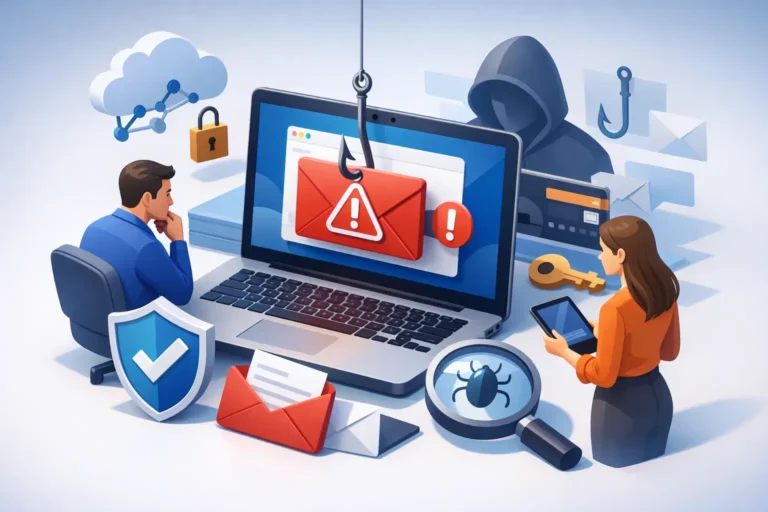
A busy employee receives an email that appears to be from a supplier, a medical portal, or the company president. It asks for a payment update, a password reset, or a document review. The request may look routine, which is exactly why it is dangerous. Effective email phishing training for employees gives people the confidence to pause, verify, and report suspicious messages before a small mistake becomes a major business interruption.
For small and mid-sized businesses, phishing is not merely an IT problem. It can delay payroll, expose client records, redirect payments, or give criminals a path into shared files and email accounts. Technology controls matter, but employees remain a critical part of the defense. The goal is not to turn every staff member into a cybersecurity specialist. It is to help them make safer decisions during a normal, demanding workday.
Why phishing training needs to reflect real work
Generic cybersecurity presentations tend to fade quickly. Employees may remember that phishing is bad, yet still click a convincing link when they are rushed between appointments, responding to customers, or closing out a job. Training works best when it uses the messages people actually receive and the tasks they perform.
A legal office may face fake document-sharing notices. A construction company may receive fraudulent invoices or messages that appear to come from subcontractors. A dental or medical practice may see convincing account alerts involving patient systems, insurance providers, or online fax services. The common thread is urgency: the email implies that work will stop, money is overdue, or an account will be locked unless the recipient acts now.
Good training teaches employees to recognize pressure tactics without assuming every unusual email is malicious. Some legitimate messages are urgent. The safer habit is to verify sensitive requests through a separate, trusted channel, especially when they involve money, passwords, personal information, or changes to banking details.
What employees should learn to spot
The strongest programs focus on a short set of repeatable checks. Staff should know that a polished logo and familiar sender name do not prove an email is safe. Criminals can copy branding, impersonate executives, and use lookalike email addresses that differ by a single character.
Employees should slow down when a message includes an unexpected attachment, a sign-in link, a QR code, or a request to bypass normal procedures. They should inspect the sender address rather than relying on the display name, and they should be cautious of messages with unusual wording, mismatched links, or unexpected requests for confidential information.
Just as important, people need clear direction on what to do next. Telling someone not to click is only half the instruction. A practical policy might ask employees to report the message using the company’s reporting process, leave links and attachments unopened, and contact the supposed sender by using a known phone number or a previously saved contact. When a message is reported quickly, the IT team can check whether other employees received the same attack and contain the risk sooner.
Business email compromise deserves special attention
Not all phishing attacks use obvious malicious links. Business email compromise often begins with a stolen or impersonated mailbox. The criminal watches conversations, then sends a believable request at the right moment. They may ask accounting to change payment details, ask an assistant to purchase gift cards, or ask a manager to send payroll information.
This is where procedures protect the business as much as awareness does. Any request to change vendor banking information or send funds should require independent confirmation. A phone call to a known contact is far safer than replying to the suspicious email, since the attacker may control that email thread. Two-person approval for larger payments adds a small amount of friction, but it can prevent a costly transfer.
How to build email phishing training for employees
Training should be ongoing, short, and connected to daily responsibilities. One annual session can establish the basics, but it will not prepare a team for changing scam tactics. Criminals regularly adjust their wording, delivery methods, and impersonated brands.
Start by setting a simple baseline. Employees should understand what phishing is, why the company is a target, and how reporting works. Avoid fear-based messaging. People are more likely to report a mistake promptly when they believe the response will be helpful rather than embarrassing.
Next, use short sessions throughout the year. A five-minute discussion during a staff meeting can cover a recent scam pattern, such as fake voicemail notifications or fraudulent Microsoft 365 sign-in alerts. The lesson should include one or two examples relevant to the business and a direct reminder of the reporting process.
Simulated phishing tests can also be useful when they are handled thoughtfully. These exercises reveal where additional coaching is needed and help staff practice identifying suspicious emails in a safe setting. They should not be designed to shame people or create a leaderboard of failures. A team that hides mistakes is less secure than a team that reports them immediately.
Training should also be adapted by role. Finance staff need strong verification procedures for invoices and payment requests. Front-desk staff may need guidance on suspicious document links and unexpected customer attachments. Managers need to recognize executive impersonation and understand why normal approval steps still apply, even when a request appears to come from an owner or senior leader.
Make reporting easy and judgment-free
A reporting process only works if employees can use it quickly. If staff must search through a policy document, open a ticket, or decide whether an email is suspicious enough to mention, many messages will go unreported. Clear instructions reduce hesitation.
The best process is visible, consistent, and simple. Employees should know whom to contact, what information to include, and what to do if they already clicked a link or entered credentials. The correct response after a mistake is speed, not silence. Early notice allows IT support to reset passwords, review account activity, isolate affected devices, and check for related messages before the incident spreads.
Leaders set the tone here. When an employee reports a suspicious message that turns out to be legitimate, thank them for checking. That response reinforces the behavior the business needs. It is preferable to verify a real email than to overlook a fraudulent one.
Training is one layer, not the whole defense
Even a well-trained employee can be caught by a highly targeted scam. Training must work alongside technical and operational safeguards. Multi-factor authentication can limit the damage from stolen passwords. Email filtering can block many malicious messages before they reach inboxes. Secure backups, endpoint protection, and prompt software updates reduce the impact if an account or device is compromised.
There are trade-offs to manage. Very aggressive email filtering can occasionally hold a legitimate message, while stricter payment approval steps may add time to routine work. For most organizations, those inconveniences are modest compared with the cost of fraudulent payments, ransomware, or exposed client information. The right balance depends on the organization’s workflow, industry requirements, and tolerance for risk.
A managed IT partner can help connect these pieces by reviewing email security settings, establishing reporting procedures, monitoring suspicious activity, and providing training that fits the organization rather than a generic checklist. For businesses that do not have an internal IT department, that support helps turn cybersecurity from an occasional concern into an ongoing business practice.
Measure improvement without losing the human side
Completion rates are easy to measure, but they do not show whether training is changing behavior. More useful signs include an increase in reported suspicious emails, fewer risky clicks in simulations, faster reporting after an incident, and consistent use of verification procedures for financial requests.
Review results with context. If multiple employees fall for the same simulation, the lesson may be that the organization needs a clearer process or a technical control, not simply more reminders. If one department regularly receives targeted messages, it may need more role-specific guidance. Good security training improves over time because it responds to what the team is actually seeing.
The most valuable outcome is a workplace where employees feel comfortable pausing before they act. A quick check of a sender address, a phone call before changing payment details, or a fast report to IT can stop an attack at its earliest stage. Those small habits protect the systems, clients, and reputation that local businesses work hard to build.
