



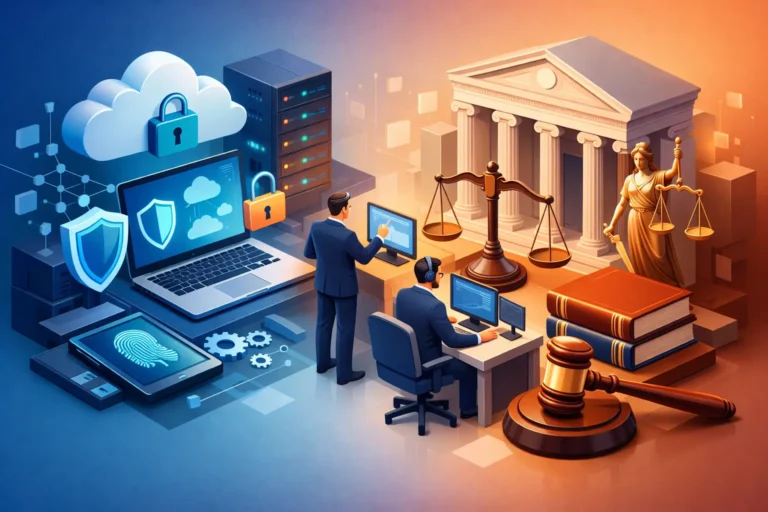
A law office does not get much warning before technology becomes a legal risk. One missed backup, one phishing email, or one server outage during discovery can disrupt client work fast. That is why managed IT services for law firms are not just about fixing computers. They are about protecting deadlines, confidentiality, and the reputation your firm has built.
Legal practices depend on technology in ways that are easy to underestimate until something fails. Case files live in document systems, staff rely on email and calendars to coordinate filings, and remote access has become normal for partners and support teams alike. When those systems slow down or go offline, the cost is measured in billable hours, missed communication, and unnecessary stress.
Why law firms need managed IT services
Most small and mid-sized firms do not need a full internal IT department, but they do need consistent support and oversight. That is where managed IT services for law firms make sense. Instead of calling for help only after something breaks, the firm gets ongoing monitoring, maintenance, security management, and guidance.
This shift from reactive support to proactive support matters more in legal environments than in many other offices. Law firms handle privileged information, financial records, contracts, court-related documents, and sensitive communications. Even a minor lapse can create serious consequences, from operational disruption to client trust issues.
Managed services also help bring structure to technology decisions. Many firms have grown piece by piece over time, adding software, devices, cloud tools, and security products as needs changed. The result is often a patchwork system that works well enough until it does not. A managed IT provider helps standardize and support that environment so it is easier to secure and easier to maintain.
What managed IT services for law firms should include
Not every provider understands the day-to-day demands of a legal office. General business IT support can be helpful, but law firms benefit most from service that accounts for confidentiality, uptime, and the pressure of client deadlines.
A strong managed service plan usually starts with proactive monitoring. That means servers, workstations, firewalls, backups, and network devices are watched for performance issues and warning signs. Problems can often be addressed before users notice them, which reduces interruptions.
Cybersecurity is another core piece. For law firms, this should go beyond antivirus software. Email filtering, ransomware protection, multi-factor authentication, dark web monitoring, secure remote access, and routine patch management all play a role. The goal is not to create obstacles for your team. It is to reduce the chance that one bad click turns into a firm-wide incident.
Backups deserve special attention. Many firms assume their files are protected because they use cloud tools or an external drive. That assumption can be costly. Good backup planning includes versioned backups, regular testing, and a recovery process that is clear enough to use under pressure. If a document system fails or ransomware hits, your team needs more than a backup on paper. It needs a real path to restoration.
Help desk support matters too. Attorneys and staff do not have time to troubleshoot printer issues, application errors, dropped VPN sessions, or phone system problems during a busy day. Responsive support keeps people moving and prevents small technical issues from affecting client work.
Security and compliance are practical concerns
Law firms often hear about cybersecurity in broad, dramatic terms, but the real risks are usually ordinary. A spoofed invoice email. A reused password. An unpatched laptop used from home. A former employee account that was never disabled. These are not rare events. They are common gaps that create real exposure.
Managed IT services help reduce these risks by putting consistent processes in place. Devices can be kept updated. Access can be reviewed. Accounts can be secured. Backup jobs can be monitored. Staff can receive basic security awareness guidance. None of this eliminates risk entirely, because no solution does, but it lowers the odds of preventable problems.
Compliance is similar. Different firms face different obligations depending on practice area, client expectations, cyber insurance requirements, and jurisdictional standards. A managed IT provider should not pretend every law office needs the same setup. Some firms need tighter device controls and documented security policies. Others may be more focused on secure remote work, retention practices, or encrypted communication. The right approach depends on how your firm operates.
The biggest operational win is less downtime
Security gets attention for good reason, but reliability is often what firms feel first. If your internet fails, your phones stop working, your case management platform lags, or shared files become inaccessible, work stalls immediately.
Managed services help address the hidden causes of downtime. Aging hardware can be identified before it fails. Network bottlenecks can be corrected. Software updates can be planned rather than pushed at the worst possible time. Printers, scanners, VoIP systems, and wireless coverage can be supported as part of the broader office environment instead of treated as separate annoyances.
This is especially valuable for smaller firms where everyone wears multiple hats. When office management, intake, billing, and legal work all depend on a handful of people, technical disruption hits harder. A managed IT relationship gives your office a dependable support structure without requiring you to build one internally.
Choosing the right managed IT provider for a law office
The lowest monthly price is rarely the best value. Law firms should look for a provider that understands response time, communication, and accountability. If your office calls with a problem affecting a filing deadline or client communication, you need to know who is handling it and how quickly.
Experience with professional offices helps. A provider serving legal, medical, dental, and other service-based businesses is often better prepared for the mix of confidentiality, compliance pressure, and day-to-day support demands these environments share. They should be able to explain their recommendations clearly, without hiding behind jargon.
It is also worth asking how support is delivered. Some firms prefer remote-first service with onsite help as needed. Others want a provider who can be hands-on and local when infrastructure issues arise. For many offices, the best fit is a combination of both.
Transparency matters just as much as technical skill. Your provider should be able to tell you what is being monitored, what is included, where your risks are, and what needs improvement now versus later. Good managed IT is not about overselling tools. It is about building a stable environment that supports your firm as it grows.
When a law firm has outgrown break-fix support
Many firms move to managed services after a frustrating pattern. Problems get fixed, but nothing really improves. Internet issues return. Workstations stay inconsistent. Backups are assumed to be working rather than confirmed. Security settings vary from one user to the next.
That is usually a sign the office has outgrown break-fix support. The issue is not that occasional repair work has no place. It is that legal practices need continuity, planning, and active oversight. Waiting for failure is expensive when your team depends on stable access to documents, communication tools, and client data.
A managed model creates predictability. It gives firms a way to budget for support, reduce surprise outages, and make smarter technology decisions over time. It also creates a clearer relationship with your IT partner, one built on ongoing service rather than emergency calls.
For law firms in Ottawa and the surrounding region, that local relationship can be especially valuable. A provider like RA IT Support can offer the practical mix many offices need: responsive help, cybersecurity focus, and day-to-day management that keeps systems dependable without making technology more complicated than it needs to be.
Technology should support legal work quietly and consistently. When your systems are monitored, protected, and maintained with the realities of a law office in mind, your team can spend less time worrying about outages and more time serving clients well.
