


A leaked employee password rarely announces itself. It usually shows up later as a strange login, a locked account, a spoofed email, or a vendor asking why your company sent a message it never sent. That is why dark web monitoring for business matters. It helps identify exposed credentials and company data before a bad actor turns that exposure into downtime, fraud, or a much bigger security problem.
For many small and midsize businesses, the risk is easy to underestimate. Owners often assume cybercriminals only focus on large enterprises, hospitals, or national brands. In practice, local firms are frequent targets because they often have valuable data, limited internal IT resources, and busy teams that cannot spend their day watching for leaked credentials. A law office, dental practice, construction company, or repair shop may not see itself as high profile, but it still depends on email, cloud logins, payment systems, and client trust.
What dark web monitoring for business actually does
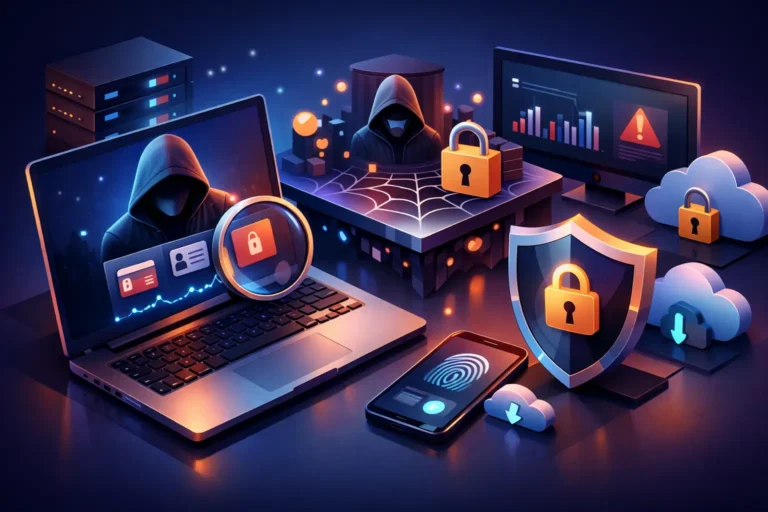
Dark web monitoring for business is the process of watching hidden online marketplaces, forums, breach collections, and data dumps for signs that your company information has been exposed. That usually includes employee email addresses, passwords, customer records, financial details, or other identifying data tied to your domain and users.
The goal is not to stop every breach from happening in the first place. Monitoring is an early warning system, not a replacement for security controls. If credentials tied to your company show up in a breach dataset, you want to know quickly so passwords can be reset, accounts reviewed, and suspicious access investigated before the problem spreads.
That distinction matters. Some business owners hear the phrase and assume it is a complete cybersecurity solution. It is not. It works best as one layer in a larger security plan that also includes endpoint protection, email filtering, multifactor authentication, backups, user training, and active IT oversight.
Why exposed credentials create such a serious business risk
A stolen password is not just an IT issue. It can interrupt payroll, compromise client communications, expose sensitive documents, and create expensive cleanup work. If one employee reuses a password across multiple systems, a single leak can open more than one door.
This is especially risky for organizations that rely on Microsoft 365, cloud storage, remote access tools, bookkeeping platforms, and vendor portals. Criminals do not always need to break into a network with advanced methods. Sometimes they log in with real credentials that were bought, traded, or pulled from an older breach.
For a small office, the operational impact can be immediate. Email impersonation can delay invoices or redirect payments. Account compromise can expose confidential files. In regulated environments such as healthcare or legal services, the fallout may also include reporting obligations and reputational damage.
Where dark web monitoring fits in a practical security strategy
Most businesses do not need more noise. They need useful signals and a clear next step. That is where monitoring provides value. Instead of waiting for suspicious activity to surface on its own, your team gets an indication that data connected to your business may already be circulating.
When handled properly, that alert triggers action. Passwords are changed. Multifactor authentication is confirmed. Login histories are reviewed. Shared accounts are evaluated. If needed, employees receive guidance on what happened and what to do next.
This is why monitoring is more useful when tied to real support. An alert without follow-up can be almost as unhelpful as no alert at all. If a business owner receives a notice about exposed credentials but does not know whether the issue is old, active, or severe, the result is often confusion or delay. A managed IT partner can translate that alert into a response plan.
Common signs your business should take this seriously
Some companies only consider dark web monitoring after a scare, but there are usually earlier warning signs. Repeated password reset requests, suspicious login attempts, spoofed messages from your domain, and employee reports that their information appeared in unrelated breaches all point to increased risk.
Password reuse is another major concern. Even well-meaning staff members sometimes reuse passwords across work and personal accounts. If a personal account is breached and that same password is used at work, attackers may try it against business systems. This is one of the most common and preventable paths to account compromise.
Turnover can also increase exposure. Former employee accounts, weak offboarding procedures, and old shared credentials create gaps that may go unnoticed until a problem appears. Monitoring helps surface some of that risk, but it works best when account management is already disciplined.
What a good response looks like after an alert
Speed matters, but so does context. Not every alert means an active breach inside your environment. Sometimes a password appears in an older dataset, or the exposed information is limited. The right response depends on what was found, when it was exposed, and whether the affected account is still in use.
A strong response usually starts by validating the alert and identifying the affected user or system. From there, passwords should be reset immediately, multifactor authentication should be enforced or reviewed, and recent sign-in activity should be checked for anything unusual. If the account has access to sensitive systems, additional containment steps may be needed.
It is also smart to look beyond the single account. If one employee reused a password, others may have done the same. If a compromised mailbox had access to invoices, internal conversations, or client information, the issue may reach farther than it first appears. That is where experienced support makes a real difference. The question is not only what leaked, but what that access could have allowed.
What dark web monitoring will not do
There is value in being realistic. Monitoring will not remove exposed data from every source, and it will not prevent every attack. It also cannot fix weak internal practices on its own. If a company ignores alerts, avoids multifactor authentication, or keeps the same shared passwords in use for years, the benefit is limited.
It is also possible to get too much low-quality data. Some low-end services generate alerts that are broad but not actionable. If every notification feels vague or repetitive, teams start ignoring them. For small businesses, clarity matters more than volume. You want relevant findings, clear interpretation, and a plan that fits your systems.
Choosing dark web monitoring for business
If you are evaluating dark web monitoring for business, focus less on flashy claims and more on what happens after detection. Ask what types of exposures are monitored, how alerts are verified, and who helps your team respond. A service is only as useful as the action it supports.
It also helps to consider your business model. A medical office handling sensitive patient data may prioritize privacy and access control. A law office may care most about confidential communications. A construction company may be more concerned about email compromise, vendor fraud, and keeping field operations running. The monitoring approach can be similar, but the response priorities are often different.
This is where personalized IT support matters. Businesses do not all face the same risk in the same way, and they should not be handed the same generic security checklist. A local managed IT partner that understands your systems, staff, and day-to-day pressures can put monitoring into context and respond quickly when something needs attention.
For companies that do not have an in-house IT department, that support fills a major gap. Instead of hoping someone notices a problem after the damage starts, you have a process for spotting warning signs early and taking practical steps right away.
Security works best when it supports operations instead of slowing them down. Dark web monitoring is valuable because it helps businesses stay ahead of threats that often begin quietly, with a leaked password or exposed account that no one knew was at risk. For a business that depends on trust, uptime, and reliable systems, catching that issue early can make all the difference.
